In A Burning World, Queers Find Home With Each Other
By Priya Prabhakar
Her brown ponytail flowed down to her hips. The stage lights refracted from the gold sequins on her gown. As the slightly blown-out speakers started filling the club with seductive instrumentals of the bolero, she looked straight into my eyes as she started mouthing the words to Qué Te Pedí? by La Lupe. It was 2018, and there I was, studying abroad in Havana, Cuba, being serenaded by a transformista (drag queen).
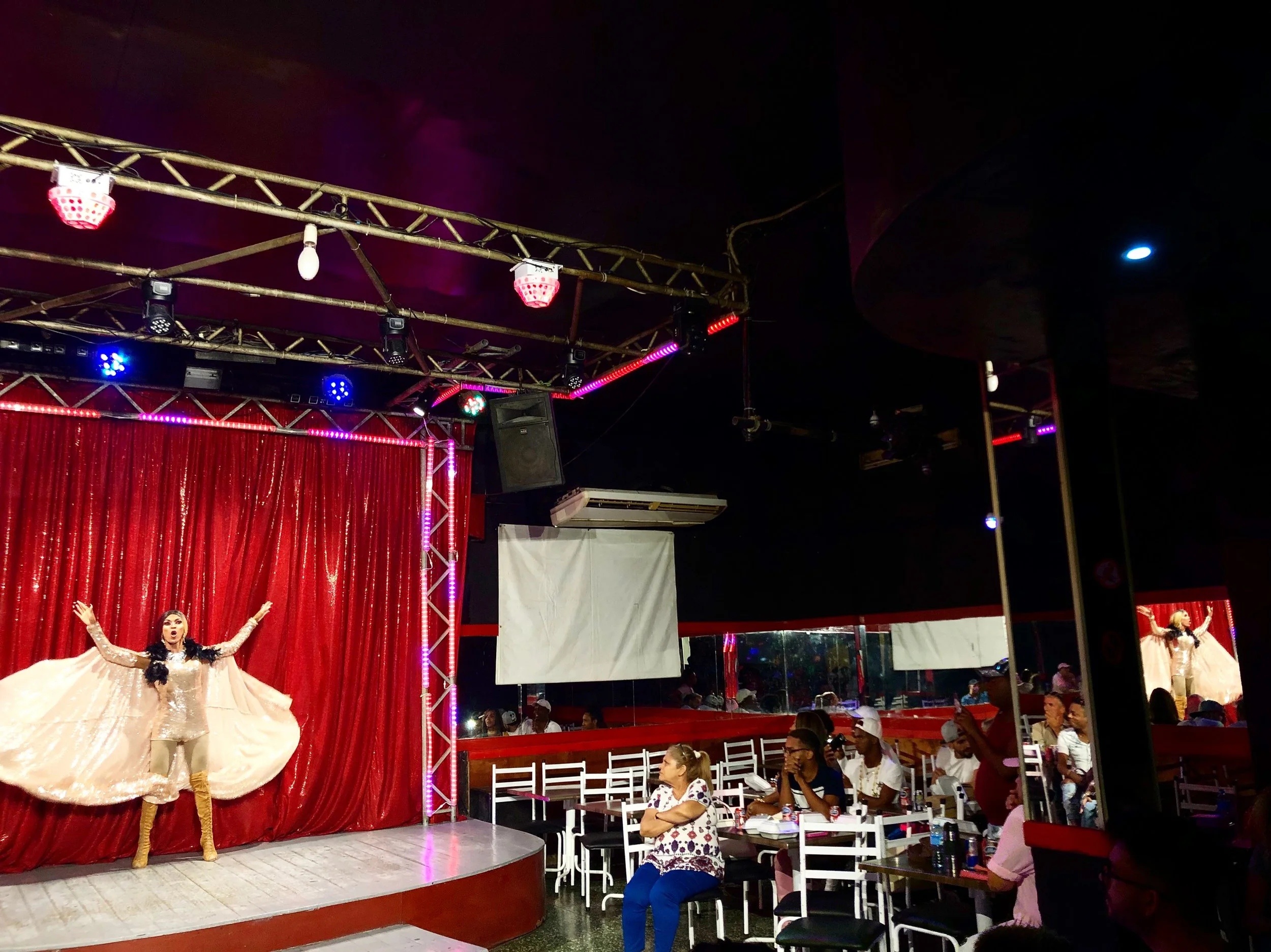
Havana, Cuba (Priya Prabhakar, 2018)
During my time in Cuba, I stayed in the neighborhood of Marianao, with my host family of three: Ramon and Mayra, a couple in their seventies, and their grandson, Samuel. Down the street from their home, neighbors gathered weekly in consejos populares (people’s councils) to discuss the draft of Cuba’s new constitution. Over 100,000 meetings were held with millions of Cubans over several years to get feedback on the constitutional draft, before it was put to a nationwide vote in February 2019. It was the first time Cuba had revised their constitution in 42 years, and the new draft included an explicitly gender-neutral definition of marriage, effectively legalizing gay marriage.
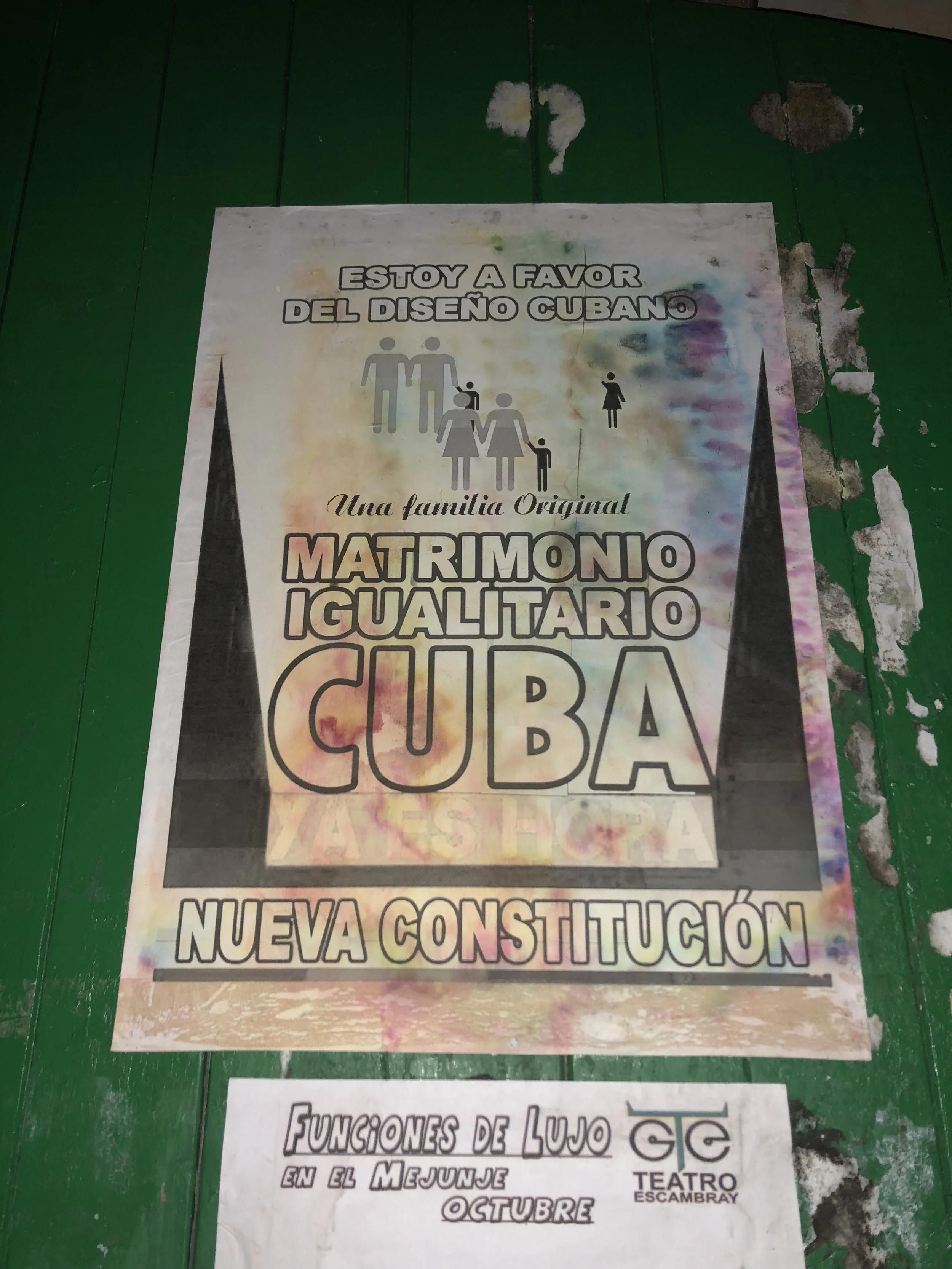
Santa Clara, Cuba (Priya Prabhakar, 2018)
On this day, we had been taken on a delegation to meet members of the National Center for Sex Education (CENESEX) and La Red Nacional de Mujeres Lesbianas y Bisexuales de Cuba (National Network of Lesbian and Bisexual Women of Cuba). We learned about the years of advocacy, popular education, and arts organizing that the trans and queer community had been doing. Many of them had migrated from the provinces to Havana to live in a communal home together, which was also a community hub. Our visit was accompanied by drag performances by many of the same activists who were involved in the fight for marriage equality. Under pressure from conservative and Catholic sectors in Cuba, the government ended up removing that language from the Constitution, but promised to defer the question of marriage to a proposed new Families Code.
Three years later, in the throes of the pandemic and the ongoing U.S. economic blockade, the Cuban government introduced Código de las Familias (“Families Code”). It goes far beyond marriage equality. It first locates the role of family as the “fundamental unit of society,” then goes on to define family itself, and then establishes the legal rights and protections that all families have. The Code states that ‘family’ may take different forms and is based on values of love, respect, and solidarity, rather than blood relation or the institution of marriage.
By expanding the definition of ‘family’ beyond a heterosexual, nuclear, matrimonial structure, the Code guarantees the rights of same-sex couples, multigenerational families, unmarried couples, surrogate mothers, adoptive parents and children, and step-parents. It strengthens the rights and protections of children, the elderly, and the disabled within the family. The Code promotes the equality of domestic responsibilities and protects the right of every person to form a family. The Code is based on “respect for human dignity as the supreme value,” and it reflects the diversity of familial structures that exist in Cuban society.
Kim Anno’s 2025 documentary, ¡Quba!, follows the incredible LGBTQ+ movement that chipped away at the influence of homophobic dogma that the Catholic church spread, through grassroots movement building, cultural caravans, and drag shows like the one I found myself at. In September 2022, Cuba’s Families Code passed with a 67% national vote in a referendum, making it one of the most progressive pieces of constitutional legislation in the world.
When The Market Decides Who Is Family
Three years later, in 2025, a crowd holding signs forms around a podium on the steps of City Hall in San Francisco, California. Mayor Daniel Lurie is at that podium, trying to rally support for the Family Zoning Plan (FZP), a sweeping upzoning plan that covers the majority of San Francisco. Mayor Lurie says that the Family Zoning Plan will incentivize more families to stay and live in San Francisco. He is met with vocal opposition from tenants, organizers, and advocates on his left, drowning out his words on the mic. One sign reads, “LURIE’S FAMILY ZONING IS ACTUALLY 75% 1 BRs + STUDIOS.”
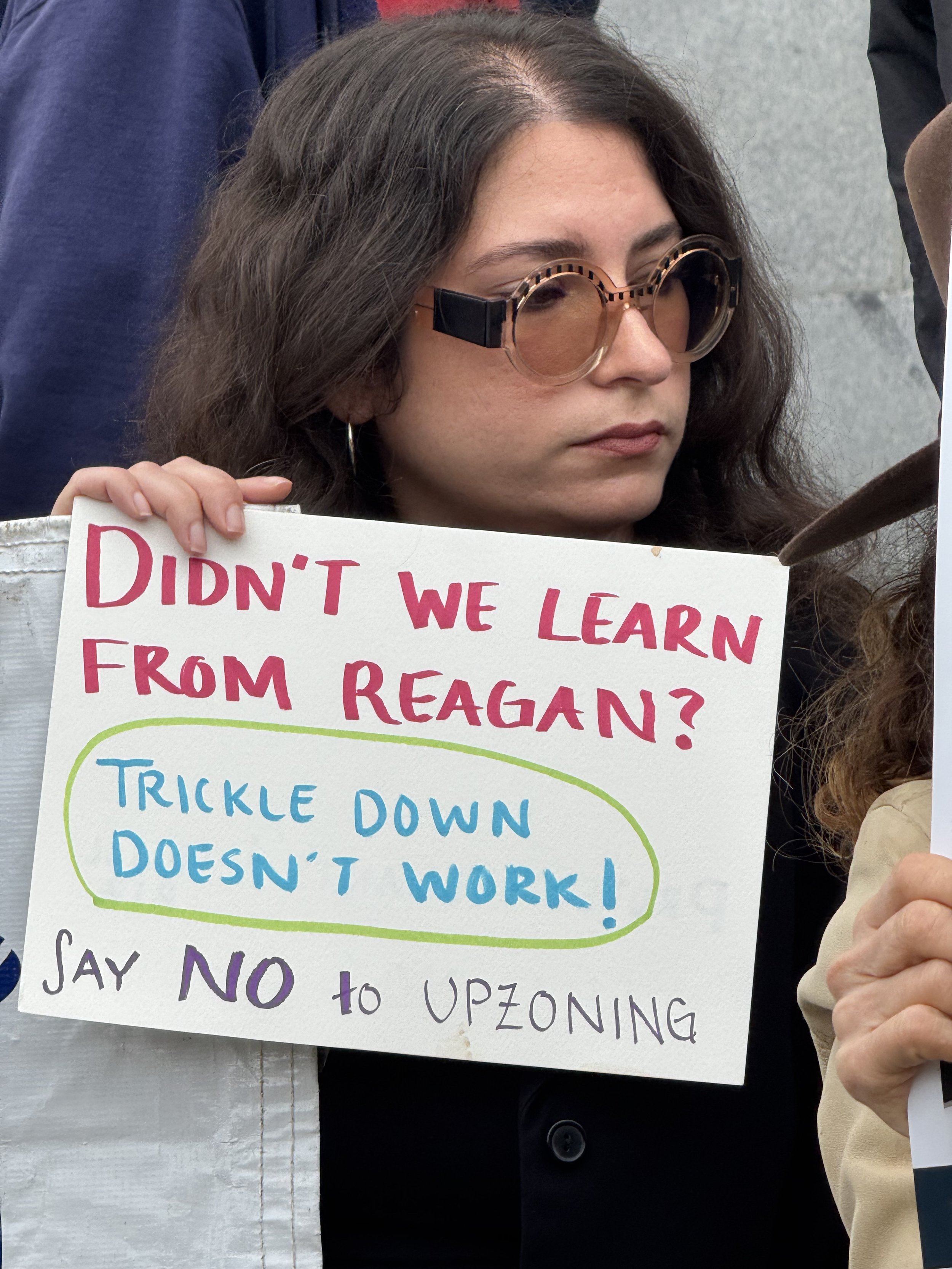
City Hall, San Francisco, CA (Priya Prabhakar, 2025)
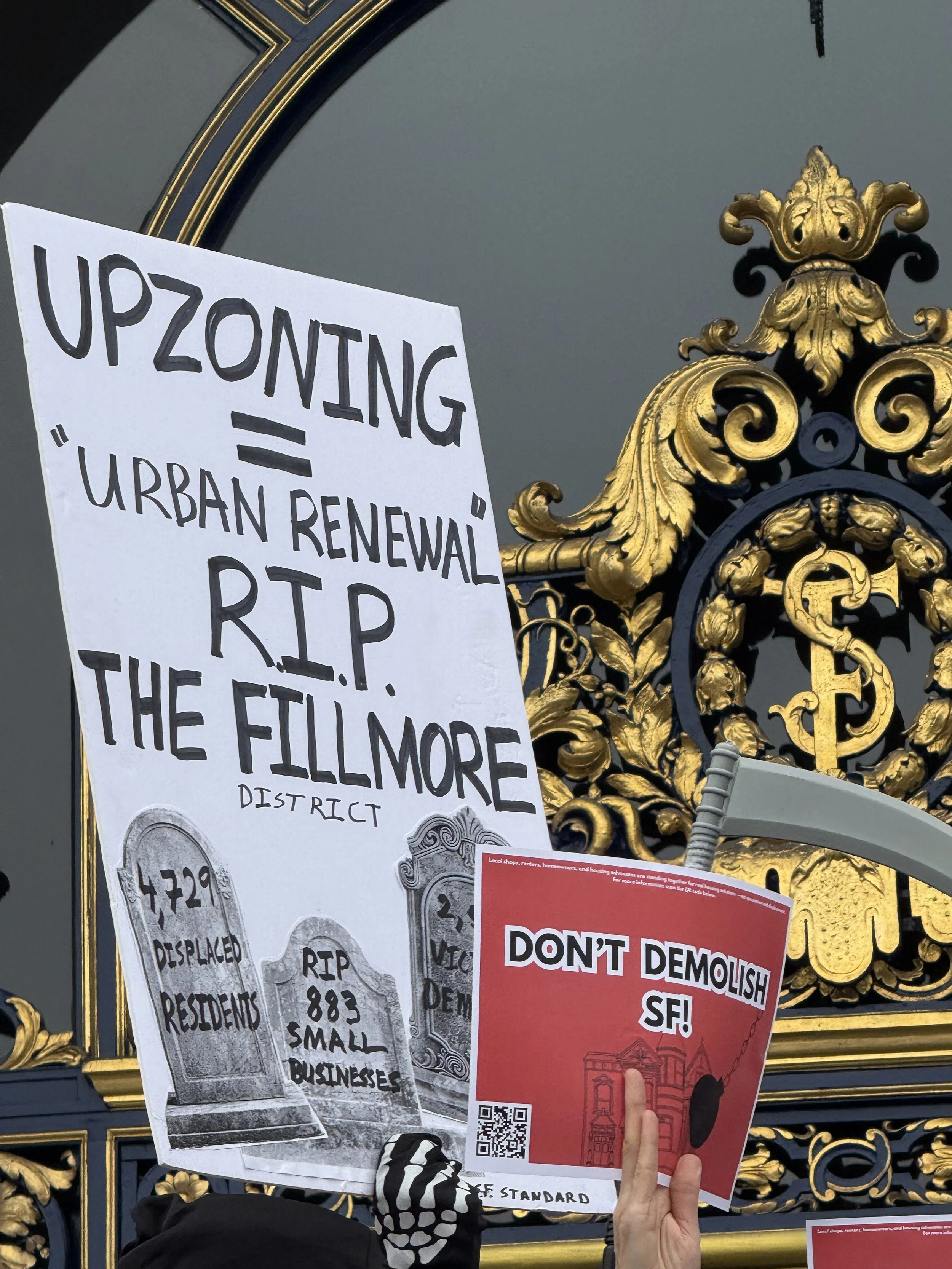
‘Family’ and ‘family housing’ appear hundreds of times in the Family Zoning Plan and were repeatedly invoked in Mayor Lurie’s speeches. Now, it is also signed into law – passed in January 2026 by the Board of Supervisors. Nowhere does the plan actually define what a ‘family’ is, and which ‘families’ this plan will serve. The FZP encourages mostly tiny studio units through what it calls "form-based density," along with a small number of 2- and 3-bedroom units. It allows for massive penthouse suites for the uber-wealthy. It encourages developers to tear down existing homes and small businesses and replace them with expensive market-rate condos and commercial spaces. The Family Zoning Plan does not reflect the needs of existing families in San Francisco, and instead lets the speculative market decide what ‘family’ means. As Doug Chan writes in The Voice of San Francisco:
“It imagines families as couples with children or as small household units that fit upper-middle-class cultural norms — not the multigenerational homes that have anchored west-side neighborhoods for decades, from Chinese and Japanese American households to Filipino, Korean, South Asian, and Russian immigrant families.”
Mayor Lurie, at one point, speaks back to the protesters. He says, “Can I speak? And then we hear from you. Because this is a country that is right now experiencing division,” as though he is not the conspirator, source, implementer, and propagandist of said division. Displacement is built into the model of speculative housing development and the Family Zoning Plan, and the AI boom is pushing it to another extreme. It is ushering billions of dollars into San Francisco, flowing in through channels built by the Mayor, to fuel the driving motor of genocide, fascism, surveillance, and war today – the tech industry. The housing economy is following. Rents have shot up by 25% since last year, and evictions are up by 44%, with the median rent for a 1-bedroom being an astronomical $4,400.
The Family Zoning Plan is, in fact, so market-driven that it doesn’t necessarily result in anything getting built – the only certainty is speculation and displacement. Developers are rushing to secure approvals for future developments that take full advantage of the FZP, such as the controversial Marina Safeway. But in this rush to lock in approvals for future developments, what families will eventually be housed if developers' proposals actually get built someday?
Queerness & A Radical Redefinition of Family
The Family Zoning Plan lets developers, the real estate industry, and the capitalist market determine what ‘family’ means, what housing gets built, and therefore, who gets displaced.
Queer communities – excluded from this manufactured ideal – have long understood the need to radically redefine ‘family’ as anti-capitalist.
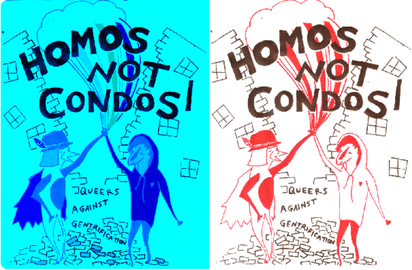
Back in 2011, San Francisco was in the midst of a previous tech boom. The queer organizing group, HAVOQ (Horizontal Alliance of Very Organized Queers), published Undoing Borders: A Queer Manifesto, in which they wrote:
“Excluded from the traditional family unit for a long time, queers have made their own families. There are many forms - from drag houses to communes - but again and again, these chosen families look like a complex network of people that take care of, care about, nurture and mentor us. Through this new imagining of family, we expand our understanding of who we are responsible to and whose struggles are intertwined with our own.”
HAVOQ’s CityStop! Flyers (2008)
At the end of August this year, I found myself at another drag show. Not in Havana, but this time, in Fresno, California. This queen wore an electric pink cat suit, had blond curly hair, and fabulous red lips, and sang along to I’m Every Woman by Whitney Houston. I was at the fourth annual Queer Housing Summit (QHS) with my friends and comrades, Crystal Mason, Jason Wyman/Queerly Complex, and Tray Smith.
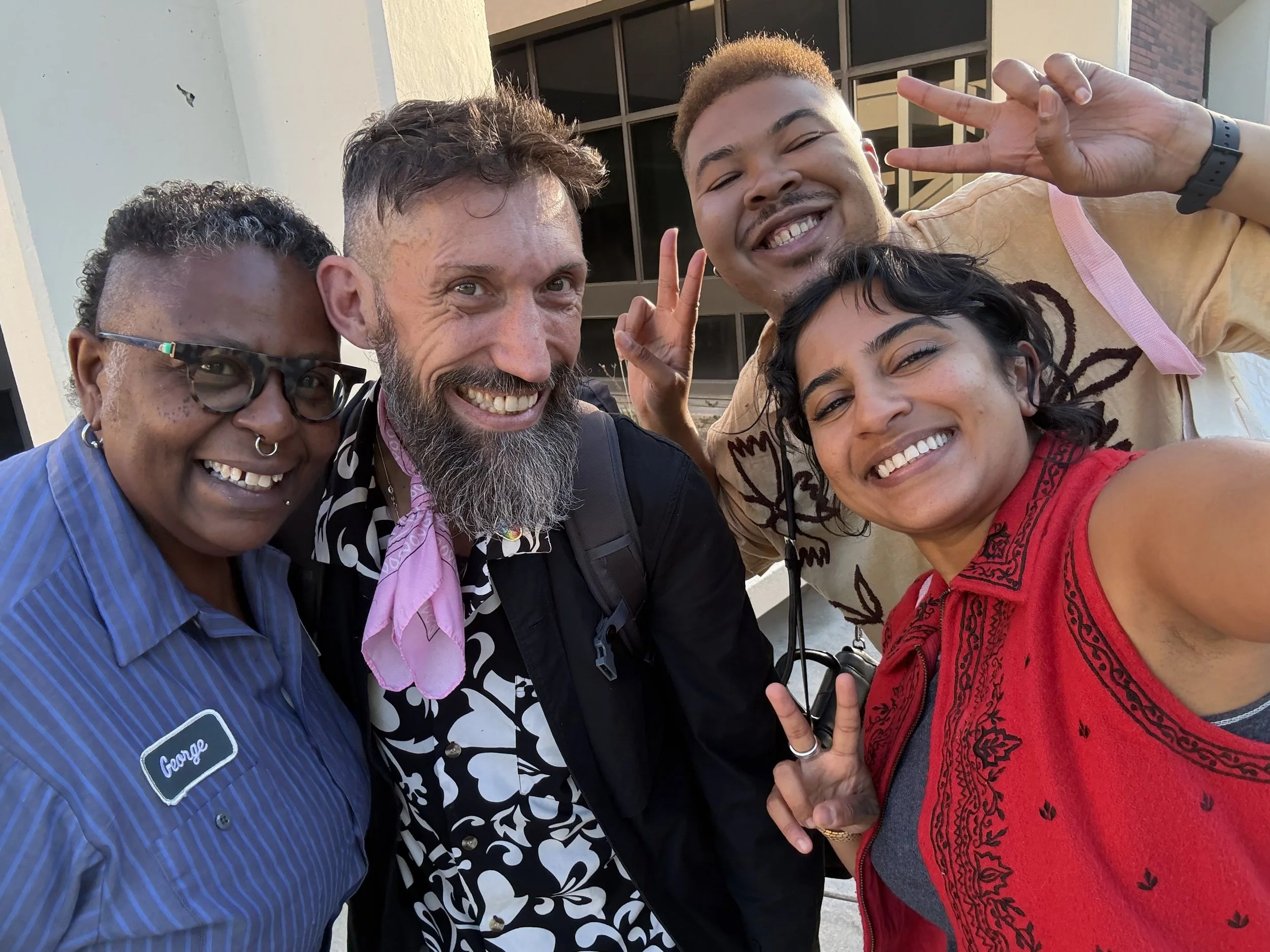
At the Queer Housing Summit with Crystal Mason, Jason Wyman/Queerly Complex, and Tray Smith.
Hosted by the South Tower Community Land Trust, the QHS is a growing grassroots summit that brings together trans and queer organizers, leaders, artists, and community members around housing justice through panels, talks, discussions, and performances. The keynote speakers for the Summit this year were Dr. Amber Alton and Mercury Stardust. Dr. Alton exposed the deep contradictions of the bloated Minneapolis police budget in comparison with the 6,000 Black and Brown homeless youth in Minnesota, most of whom are trans and queer. Mercury Stardust shared her story of coming out as a trans woman and building her social media platform by sharing home repair knowledge.
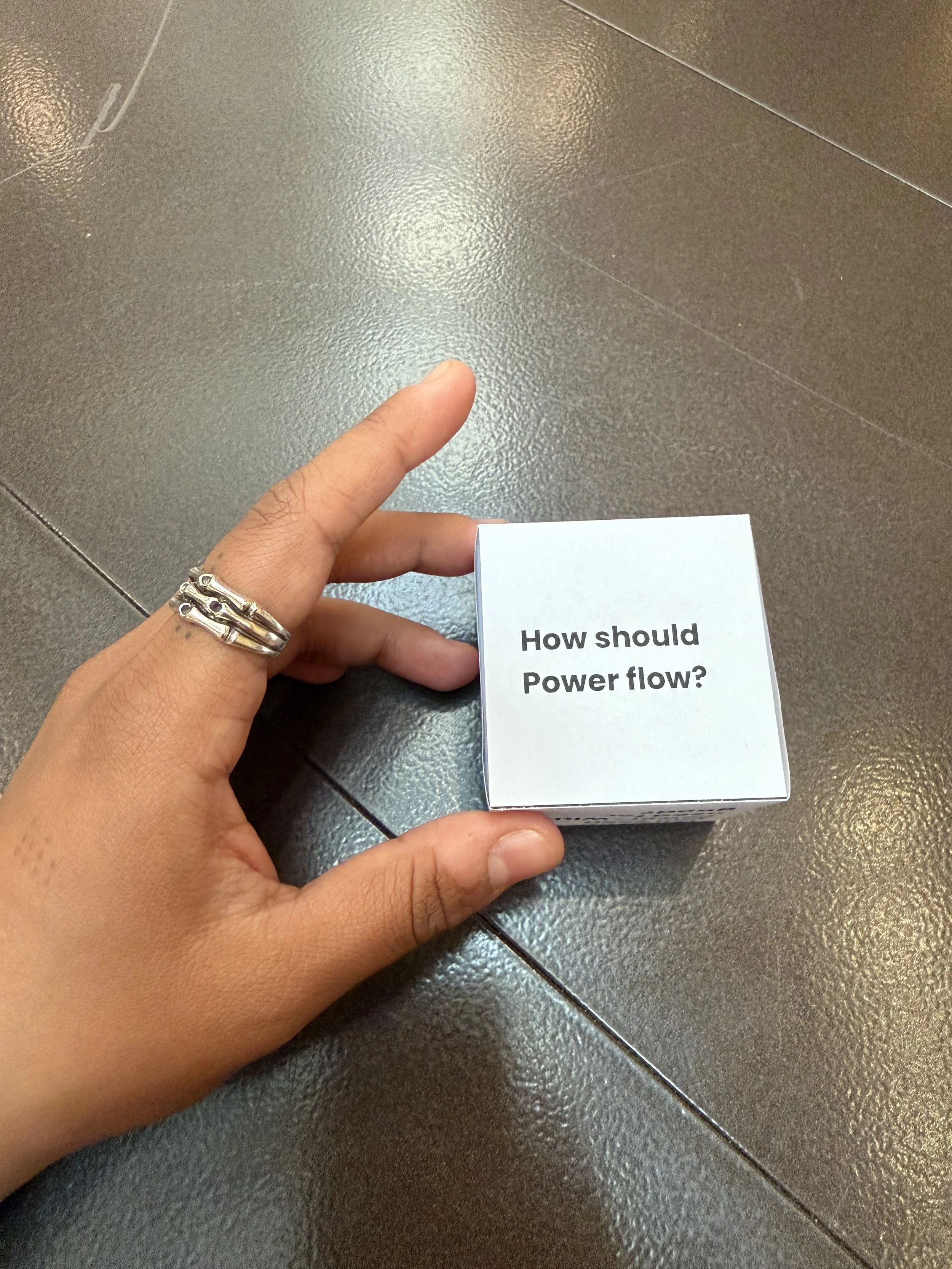
Dice created for our opening activity on power at the Queer Housing Summit (2026)
Each day, we facilitated opening activities and conversations about power. What is power? How does it show up in our lives, in our relationships, in our movements, neighborhoods, and in our communities? How does it show up within ourselves? After these activities, our team reflected on the unique energy of the space. There was instant connection, vulnerability, and openness. It was such a queer space. Because to be queer is to feel power or lack thereof in your body, even before you are able to understand or verbalize it. There was a throughline of rooting our work together in an expansive, queer, anti-capitalist definition of ‘family.’ We kept coming back to one specific question: What does queerness offer our housing justice movements?
As trans and queer people, we go through this world subverting the dominant scripts that we are fed from birth. Scripts about how we should act, how we should live, what we should do, what we should value, and who we should be. When queers are forced into exile, either from the family they were born into, broader society, and/or the state, we learn to become experts in transformation.
In the 80s, the AIDS epidemic was ravaging gay communities in San Francisco. Many of these gay men had come to San Francisco to find refuge after being estranged from their families, and were once again abandoned by the government and healthcare systems. Lesbian nurses and activists were the ones who opened their homes to gay men, organized blood drives, fundraised, provided hospice care at SROs, and politically advocated for their survival. Queer family was the source of survival in the face of abandonment.
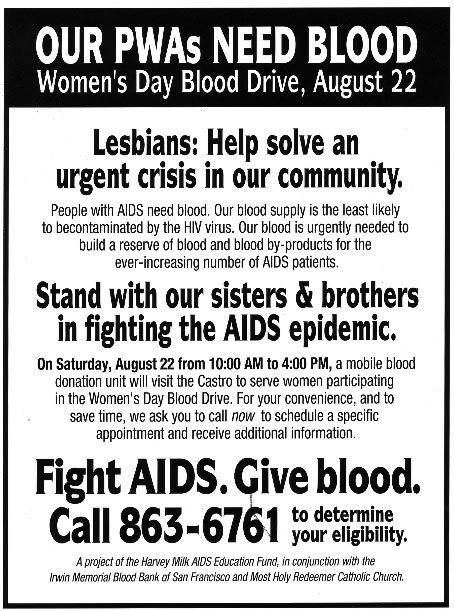
Harvey Milk AIDS Foundation (1980)
We build belonging, home, family, and power through skills that become our means of survival. We find family and belonging at the parks, on the streets, at the bars, and at the community centers. Queerness offers our movements the ability to see beyond structures imposed on us and to build relationships, communities, and movements that can survive change. Queerness has always informed our housing justice movements because it expands our definition of family, housing, and kinship, which in turn benefits all of us in San Francisco – queer and non-queer alike: immigrant families, multigenerational families, and chosen families. And these are skills our movements desperately need. As Cuban-American scholar José Esteban Muñoz wrote: “The future is queerness’s domain.”